
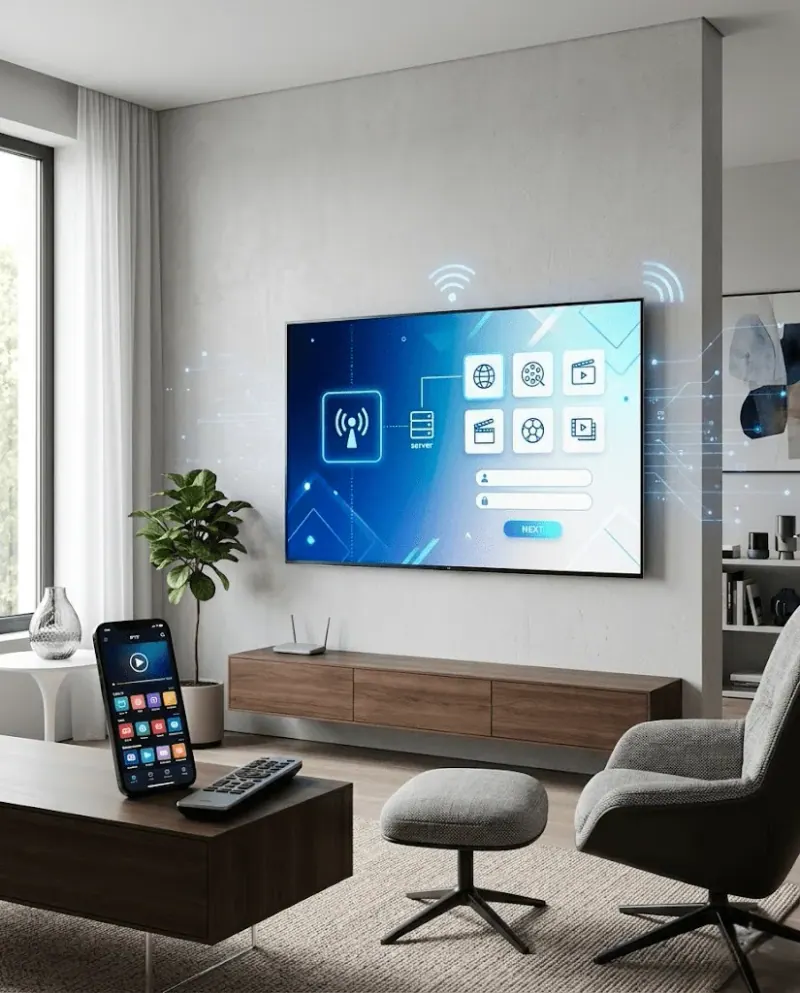
TV Without a Satellite Dish: The Best Options for Rented Flats
Your landlord will not allow a dish on the balcony? No problem. These are the best ways to watch TV without a satellite dish in a rented flat in Germany.
It is a classic situation in rented flats: you move in, the TV is set up – and then it turns out there is no cable socket and the landlord will not allow a dish on the balcony. Especially if you have just arrived in Germany, that can be frustrating. The good news: watching TV without a satellite dish is easier today than ever. Here we compare the options and show what you need.
Why landlords often refuse dishes
In many cases, landlords in Germany may forbid a satellite dish on the façade or balcony – for example if a cable connection exists or the appearance of the building would suffer. There are exceptions, such as when a dish is the only way to receive programmes from your home country, but these are always decided case by case. The German tenants’ association Deutscher Mieterbund has more information.
TV without a satellite dish: four options
Indoor aerial with DVB-T2 HD
A small aerial by the window receives the public broadcasters free of charge in many regions. Private channels in HD cost extra. Whether reception is good depends heavily on your location.
Cable connection
If there is a cable socket, you can sign your own contract. The signal is stable, but you usually commit for one or two years.
Broadcaster apps and media libraries
For occasional viewing, the broadcasters’ apps are often enough. Some offer live streams too, though spread across many separate apps.
IPTV over your internet line
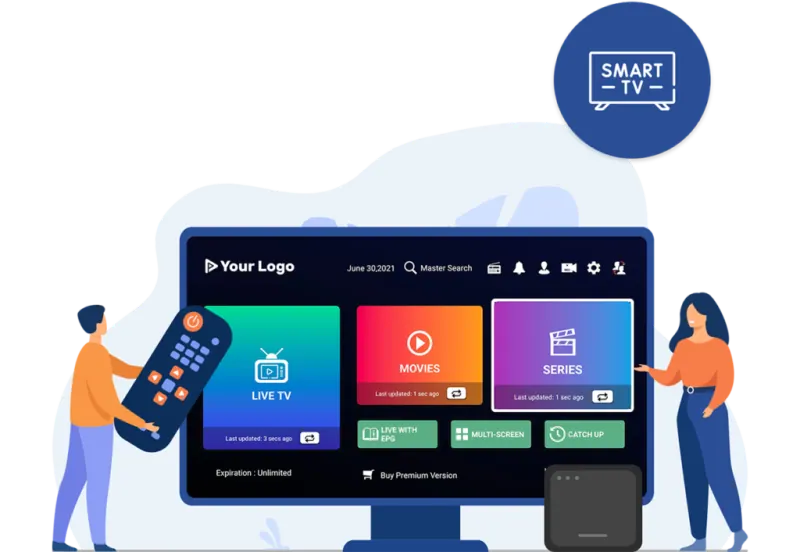
With IPTV you only need your internet connection and a smart TV or streaming stick. No dish, no socket, no cables through the wall. How it works is explained in what is IPTV.
What you need for IPTV in a rented flat
- An internet connection with a stable 10 Mbit/s or more for HD, ideally 25 Mbit/s for 4K.
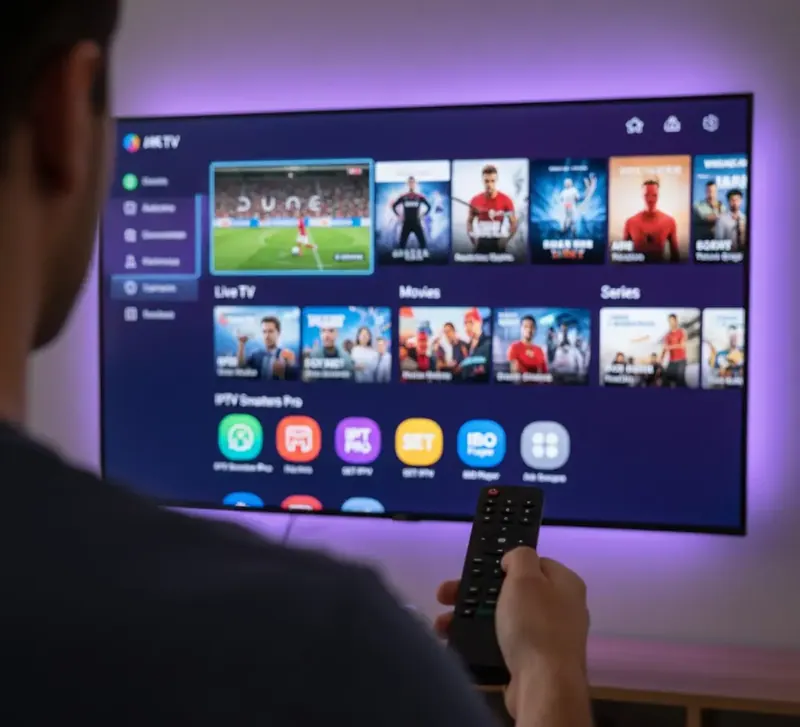
- A smart TV with a suitable app, or a Fire TV Stick or Android TV box.
- A login from an IPTV provider.
- Ideally a LAN cable or good 5 GHz Wi-Fi at the TV.
Getting started in a few steps
- Measure your speed where the TV is.
- Check whether your TV supports an IPTV app – otherwise get a stick.
- Choose a plan and receive your login.
- Install the app and enter the details – see install IPTV.
- Create favourites and start watching.
An advantage many people underestimate
Renters move more often than owners. With a dish or a cable contract, the organisation starts from scratch every time. IPTV simply comes with you: pack the stick, connect to the new Wi-Fi, done. If your time in Germany is limited – a job assignment, studies, a few years in a city – that flexibility is worth a lot.
A closer look at the indoor aerial
DVB-T2 HD is the first idea for many people who want TV without a satellite dish. A small aerial by the window and a TV with a suitable tuner – done. Whether that works well for you depends mainly on how close the nearest transmitter is and how thick your walls are. Upper floors with windows facing the transmitter have the best chances; basement flats and older buildings with thick walls often struggle. Bear in mind too that the private channels in HD are encrypted and need an extra subscription.

The right solution for typical living situations
Student flat or room in a flatshare
There is usually neither a cable socket nor space for a dish. A stick on the TV or a laptop with IPTV is often the simplest solution, because it comes along on the next move.
Older flat in the city
Thick walls weaken Wi-Fi and aerial reception alike. A flat LAN cable to the TV helps IPTV run smoothly. More in our article on IPTV internet speed.
New build with fibre
The best conditions for IPTV in 4K. There are often network sockets in the rooms, so the TV can be connected directly.
Second home or weekend flat
If you are only there some of the time, you do not want a second cable contract. IPTV with the existing internet is particularly practical here.
What your landlord can say about it
IPTV over the internet requires no structural changes. You do not drill, mount anything on the façade or use anything but your own internet connection. That is why you do not need your landlord’s permission for it – unlike a dish on the balcony.
Frequently asked questions
Do I need a smart TV? No. An older TV with an HDMI port is enough if you connect a streaming stick.
Does it work with mobile internet? In principle yes, with enough data. A fixed connection is more stable, though.
Can I take it with me when I move? With IPTV, yes – that is one of its biggest advantages.
Verdict: TV without a satellite dish is easy
TV without a satellite dish works in several ways today. For occasional viewing, an aerial or the broadcasters’ apps are enough. If you want flexibility and lots of content in one place, IPTV is a good choice – with no drilling and no discussions with your landlord. Our plans are on IPTV prices, and we answer your questions on WhatsApp in English.
More articles

Football Night with Friends: How to Prepare Your TV and Living Room
Friends invited, snacks ready – and then the picture freezes? With this preparation, your football night with friends runs smoothly on the technical side.
Using IPTV When Travelling: Holiday Homes, Hotels and Campervans
IPTV when travelling: how to take your TV with you to a holiday flat, a hotel or a campervan – with tips on devices, internet, hotel Wi-Fi and mobile data.
Renew Your IPTV Subscription: The Checklist So Nothing Stops
Is your IPTV plan about to end? With this checklist you renew your IPTV subscription in time, keep your settings and avoid a black screen.